Management of Hemiplegic Shoulder Pain
CE Information
4.5/5
2174 Ratings , 331 Reviews
CE Information
Select a Format
Select Length
Highlights
- Review the mechanics of the normal and hemiplegic shoulder complex
- Identify assessment tools used to evaluate and assess hemiplegic shoulder pain and upper extremity function
- Preventative measures across different health care settings to manage hemiplegic shoulder pain
- Easy to use evidence-based treatmentstrategies to address hemiplegic shoulder pain and improve function in patients with stroke
Summit Subscriber? Log in to add this course.
Additional Information
- Course Description
- Learning Objectives
- Outline
- Instructor Bio & Disclosures
- CE Credits
- FAQs
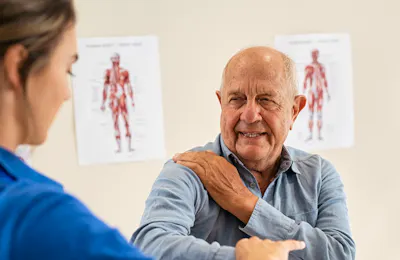
Every year about 795,000 people in the United States have a stroke. Stroke survivors may present with several clinical manifestations including hemiplegia, neglect, vision problems, spasticity, etc. One of the most common consequences of a stroke is development of hemiplegic shoulder pain (HSP) with a reported incidence of 30%-65%. The pathogenesis of shoulder pain after a stroke is multifactorial and stems from neurogenic as well as mechanical factors, which often coexist together. HSP prolongs recovery and hospital stay, worsens arm function, and reduces Quality of Life (QOL) leading to increased post stroke morbidity.
Rehabilitation plays a key role in management of patientswith HSP. In this 2-hour course, we will first understand normal shoulder mechanics and the pathophysiology of development of HSP (includes subluxation, complex regional pain syndrome, tendinitis, capsulitis, rotator cuff muscle tears). Then we will discuss standardized outcomes to assess HSP both at impairment level but also as activity/ participationlevel. Finally, we will list treatments used to address HSP in a variety of settings and discuss the current literature supporting these treatments. A case study will be used to enhance learning and understanding of this topic.
Target Audience: Physical Therapists, Physical Therapist Assistants, Occupational Therapists, Occupational Therapy Assistants, Athletic Trainers
Delivery Format: Asynchronous, recorded video to be watched online at your leisure
Highlights
- Review the mechanics of the normal and hemiplegic shoulder complex
- Identify assessment tools used to evaluate and assess hemiplegic shoulder pain and upper extremity function
- Preventative measures across different health care settings to manage hemiplegic shoulder pain
- Easy to use evidence-based treatmentstrategies to address hemiplegic shoulder pain and improve function in patients with stroke

Other therapists also liked...
Reviews
5/5
Irene (TX) on Sep 05, 2026
presenter provided great information and examples
4/5
Jillian (TX) on Sep 01, 2026
i think it would have been good to know how to specifically treat the shoulder pain with interventions and not just orthotics.
5/5
Courtney (NY) on Aug 26, 2026
fantastic lecture, very informative
4/5
Tony (MS) on Aug 17, 2026
very thorough.
5/5
Holly (TN) on Aug 16, 2026
excellent information
4/5
Neala (OR) on Aug 06, 2026
good instructor however sometimes describing an intervention\/ position using words but i could not imagine what it looked like, i personally would benefit from more visuals like video or picture so i can see what she means
5/5
Lisa (FL) on Jun 21, 2026
excellent examples
5/5
Laura (CA) on Jun 10, 2026
loved her use of a tiny scapula. quite effective on a webinar
4/5
Jane (NC) on May 23, 2026
needed more video or real life examples.
5/5
Artur (MD) on Apr 30, 2026
great course!!
Unlock Unlimited CE Courses with Summit Subscription
Pick Your Plan & Sign Up Today!

For Those Who Care
Expert-led CE in all 50 states. In-person, live, and on-demand. With you for every stage of your career.
(800) 433-9570Professions
Rehab Therapy
Physical Therapists
PT Assistants
Occupational Therapists
OT Assistants
Speech-Language Pathologists
Athletic Trainers
Pelvic Health (H&W)
Behavioral Health
Psychologists
Counselors
Social Workers
Marriage & Family Therapists
Students
PT/PTA Students
Fitness Training
Personal Trainers
Fitness & Nutrition Coaches
Courses by Format
In-Person Workshops
Live Webinars
Live Streams
On-Demand Video
Podcasts
Certificate Series
State Requirements